Catalyst Co-Lab Delivers Tools & Collaborations to Serve Children with Education and Mental Health Services in Gaza
Session Type:
Catalyst Co-Lab
Session Host:
Dr. Mohammad Issa
Resources:

Sponsors:
Background Video
Overview
In June 2024, Catalyst Co-Labs gathered 35 experts from 21 countries to address the educational disruption and mental health crisis affecting children in Gaza. This Co-Lab was initiated by Creativity Lab Palestine, in partnership with Yes Theatre for Communication among Youth, whose team of 150 teachers and psychologists continues to support children across 60 shelter centers despite the conflict. Since 2016, Creativity Lab has worked with over 350 educators and reached more than 20,000 children through informal, creative theatre-based methods that focus on Mental Health and Psychosocial Support needs.
Background
Amid the destruction of Gaza’s educational infrastructure, where 625,000 children lack access to school and over 22,000 teachers are unemployed, organizations sought global expertise to adapt and expand their programs under extreme conditions. While most international NGOs waited for a ceasefire, Creativity Lab and Yes Theatre were among the few local groups that kept operating. Their urgent call to the global community: How can we continue educating while healing children?
Key Outcomes and Achievements
The two 90-minute Co-Lab sessions yielded tangible programmatic, organizational, and strategic results:
Resource Exchange and Application: Participants shared guidelines, curricula, and online resources that Creativity Lab and Yes Theatre have already started adapting.
New Collaborations: Partnerships formed with educational NGOs and mental health professionals have led to pilot interventions reaching over 2,000 children, combining creative learning with trauma-informed care.
Digital Innovation: After the Co-Lab, Creativity Lab signed funding agreements with two companies to co-develop a digital platform for mental health interventions.
Strategic Shifts: Mental health and well-being were elevated to key themes in Creativity Lab’s strategy, and new communication channels were opened with UNICEF, Education Cannot Wait, and other international donors.
Global Solidarity: Beyond technical solutions, the Co-Lab fostered moral support and hope as reflected by feedback from a participating expert:
“These sessions are about more than technical solutions—they are about solidarity, community, and standing with Gaza’s children in their hour of need”.
The Co-Lab Process
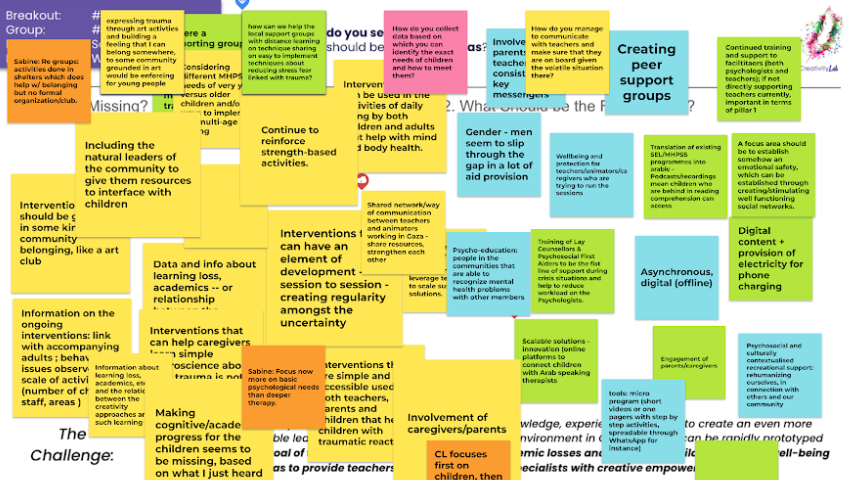
Catalyst Co-Labs designed and led a virtual, collaborative process that allowed Creativity Lab and Yes Theatre to work with global experts in education, psychosocial support, and humanitarian response. The Gaza Co-Lab brought together participants from networks such as Catalyst 2030, Ashoka, Skoll, Schwab, and Echoing Green. Experts included teachers, psychologists, parents, community members, consultants, and representatives from universities, foundations, nonprofits, NGOs, and global collaboratives.
Over two sessions, experts shared frameworks, case studies, and practical methods across ten thematic areas, including play-based learning, emotional resilience, teacher capacity building, and creating safe learning environments. The process highlighted human-centered design, collective problem solving, and peer learning to develop targeted interventions that integrate educational and psychosocial support systems for Palestinian children.
Impact on Teaching and Learning
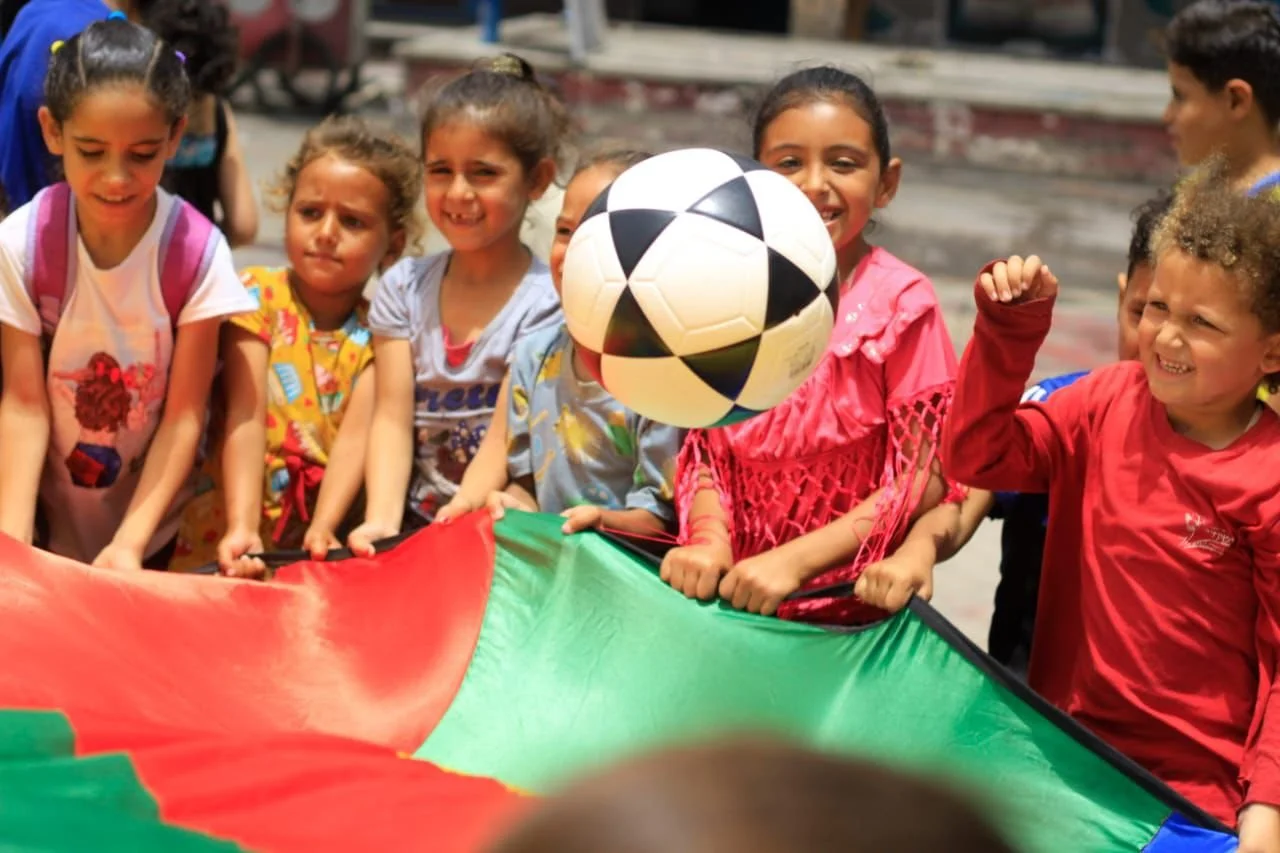
The Co-Lab inspired Creativity Lab’s new “Popular Education” program, which incorporates emotional resilience, co-creation, and accelerated learning cycles designed for children under stress. Teachers and facilitators in Gaza reported improved student engagement and motivation through new methods that combine play, mindfulness, and storytelling. Children have benefited from activities that encourage safe emotional expression and resilience, while staff have noted renewed energy and a shared purpose despite ongoing challenges.
Lessons Learned
Despite logistical and security challenges, the Gaza Co-Lab showed how creativity, art, and play can bring hope and stability to children’s lives, even in times of war. It reaffirmed the importance of building a global network of solidarity around local changemakers who act now, not later. The Co-Lab demonstrated that local ownership combined with global collaboration can accelerate innovation even during crises.